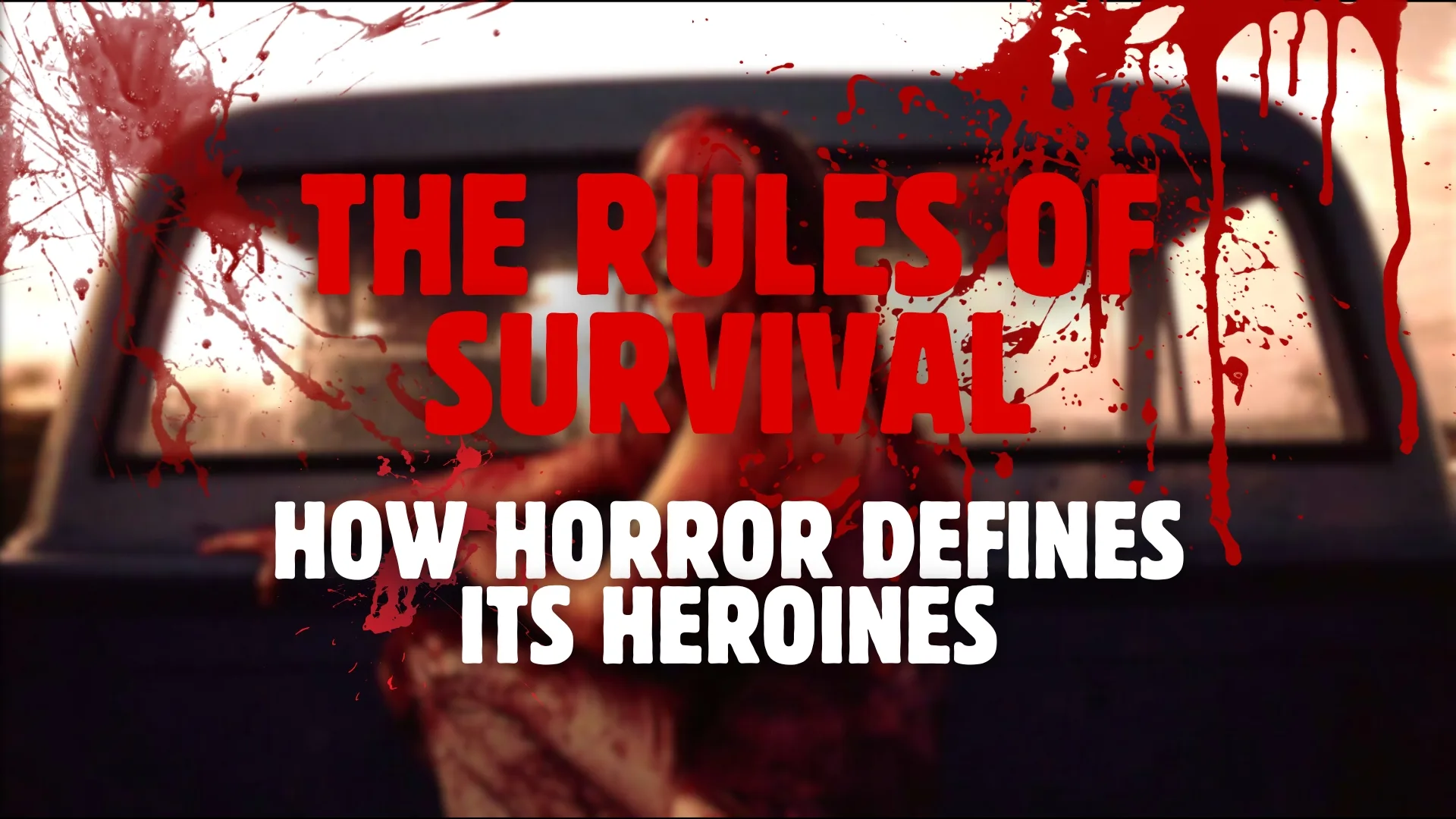
Why the Final Girl Matters
Friends, welcome back to the Broke Boogeyman blog — where horror isn’t just blood on the screen, it’s the mirror in the dark. Around here we don’t just consume movies, we dissect them. We pull apart the rules, the strategies, the unspoken truths about what makes you live or die when the maniac comes calling.
And no rule matters more than the one that defines the Final Girl.
The Final Girl isn’t luck. She isn’t randomness. She’s the sum of choices, instincts, and grit under impossible pressure. Horror doesn’t just kill — it tests. And the Final Girl is the one who passes the exam, even when the questions are written in blood.
The Rules of Survival
Rule One: Adapt or Die
Every Final Girl worth the name has a moment when the world tilts sideways. The rules of reality collapse. Grace in Ready or Not (ranked here) discovers her in-laws want to sacrifice her to Satan. Erin in You’re Next (see the ranking breakdown) realizes the masked intruders aren’t random maniacs — they’re part of a coordinated hit.
And in those moments, they don’t freeze. They adapt.
Key examples
- Grace: rips her gown, uses the mansion’s layout and tools against her hunters.
- Erin: sets booby traps and turns the house into a weaponized maze.
Takeaway: Horror punishes the passive. The Final Girl lives because she refuses to stay that way.
Rule Two: Know Your Enemy
Ginny Field didn’t have a weapon powerful enough to stop Jason Voorhees. But she had something better — insight. Putting on Pamela Voorhees’ sweater wasn’t desperation; it was psychology. For a moment, Jason was vulnerable.
Kirsty Cotton did the same with the Cenobites. She didn’t outmuscle demons — she learned their rules, read their contracts, and bargained her way out (see where she ranks).
Key examples
- Ginny Field (Friday the 13th Part 2): weaponizes Jason’s maternal fixation.
- Kirsty Cotton (Hellraiser): exploits the Cenobites’ code to survive.
Takeaway: Villains have patterns and blind spots. Study them and strike where they break.
Rule Three: Trauma Doesn’t End with the Credits
Julie James in I Know What You Did Last Summer survived once. When the fisherman came back, she was faster, sharper, less naive (Julie’s placement).
Laurie Strode proves it across decades: trauma is a shadow that follows you — but it can be trained into a blade (Laurie in the Top 5).
Key examples
- Julie James: returns tougher and more prepared in the sequel.
- Laurie Strode: reframes survival as long-term readiness.
Takeaway: Survival is iterative. You learn, you harden, you show up again.
Rule Four: Survival Is Strategy, Not Purity
Carol Clover’s Men, Women, and Chainsaws framed the Final Girl as “pure.” That was 1992. Horror evolved.
Sidney Prescott has sex in Scream and still kills Billy Loomis (Top 5 analysis). Grace swears, smokes, and outlives a Satanic cult (10–6 breakdown). Erin turns a blender into a weapon and doesn’t care about moral optics.
Key examples
- Sidney Prescott: breaks the “virgin lives” myth and still wins.
- Grace & Erin: ruthless pragmatists who do what it takes.
Takeaway: Modern Final Girls don’t survive because they’re “good.” They survive because they’re effective.
Rule Five: Survival Means Evolution
The Final Girl doesn’t just make it out alive — she changes.
Sally Hardesty’s laugh in the truck isn’t relief; it’s rebirth through hysteria. Nancy Thompson becomes a mentor in Dream Warriors. Sidney Prescott evolves from target to legend. Dana Polk ends Cabin in the Woods by rejecting the entire system.
Key examples
- Sally Hardesty: survival as psychic rupture.
- Nancy Thompson: survivor to strategist.
- Sidney Prescott: victim → icon.
- Dana Polk: breaks the mechanism that manufactures Final Girls.
Takeaway: Survival rewrites you — and sometimes rewrites the genre.
Wrapping Up: The DNA of Survival
Strip away body counts, sequels, and scream-queen clichés, and the rules condense to this:
- Adapt or die.
- Know your enemy.
- Face your trauma again and again.
- Refuse purity politics.
- Evolve or be forgotten.
The Final Girl defines horror because she proves survival is possible. Not easy. Not guaranteed. But possible.
What’s Next
We’ve laid the foundations. We’ve counted down the greats. We’ve broken down the rules. One more step in this cluster: legacy — because survival isn’t the end of the story; what comes after is.
Up next: Final Girl Legacy: Icons Who Changed Horror Forever
Until then… keep collecting the stuff they don’t want you to remember.
Leave a Reply