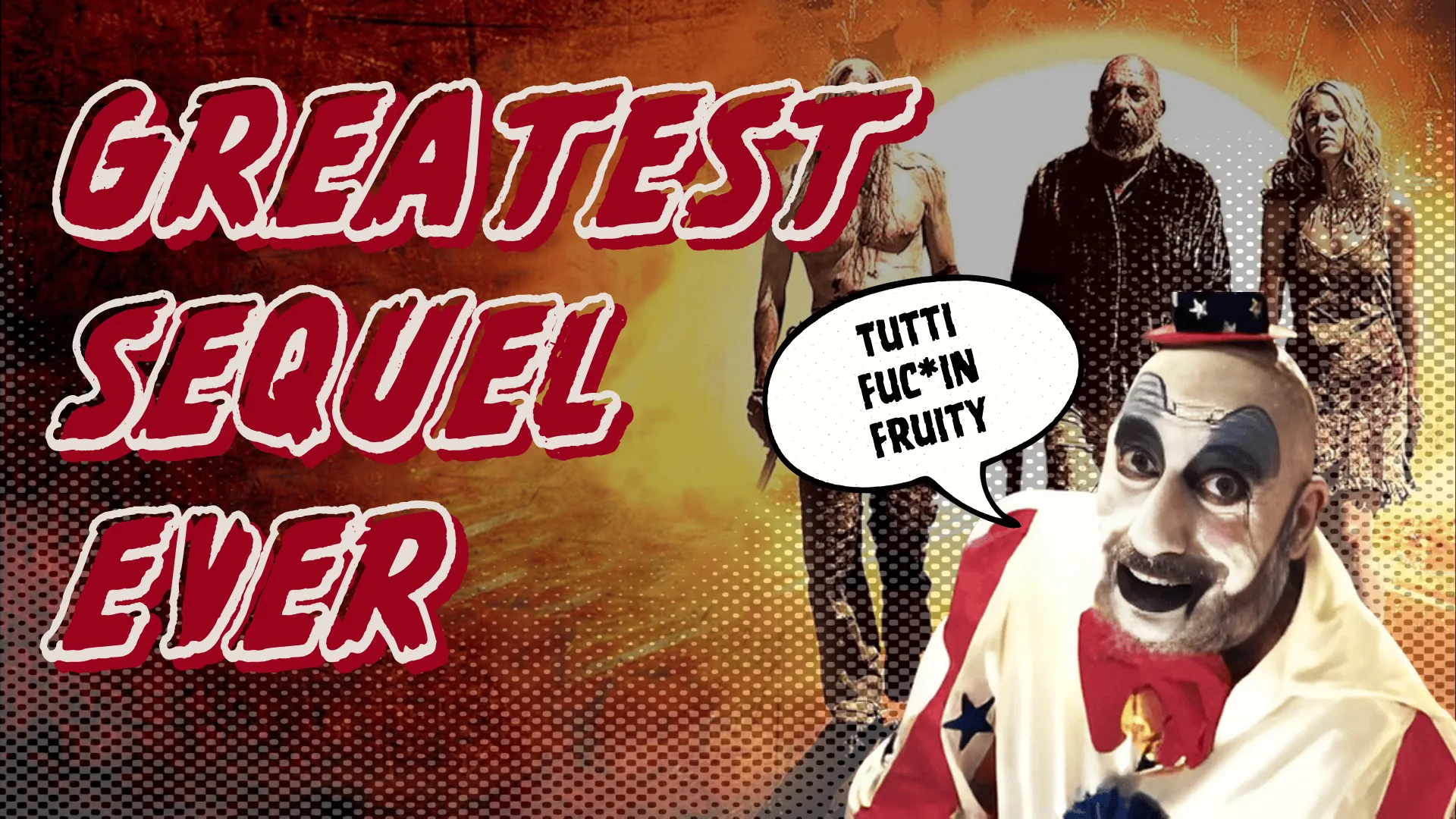
This The Devil’s Rejects analysis argues the film is the greatest horror sequel of its era: a sun-scorched American nightmare where three maniacs refuse to lie while the country around them does. It burns the rulebook and dares you to care. Twenty years on, it still hits back—harder, colder, more honest—because it finds beauty inside the decay and exposes the hypocrisy wrapped around it.
Further reading:
• House of 1000 Corpses — Collector/Context Guide
• FearDotCom (2002): The Internet’s First Cursed Prophecy
• Physical Media Hub
The Devil’s Rejects Analysis: Why This Might Be the Greatest Horror Sequel
Most sequels chase safer versions of the first hit. Rejects sprints the other way. It abandons the haunted-house carnival of Corpses for a dust-blasted outlaw epic, stripping the genre to sinew and nerve. No final girl. No moral center. Just characters who refuse to lie about who they are—and a country that can’t say the same.
Burn the Rulebook (Road Movie, Not Slasher)
Zombie reshapes the frame: motels and highways instead of basements and lairs. The camera moves like a documentary that stumbled into an execution. Spaulding cons his way through breakfast. Otis sermonizes at gunpoint. Baby laughs where most people pray. The tension isn’t “who dies next?”—it’s “how far will honesty take the damned?”
Related reading: House of 1000 Corpses guide
Sun-Bleached Craft (1970s Texture, American Violence)
The film looks lived-in: crash zooms, lens flares, grime in every corner. It honors the tactile grammar of the 1970s without cosplay. The soundtrack isn’t needle-drop nostalgia; it’s character. Classic rock doesn’t soothe here—it indicts. When the music swells, it isn’t comfort. It’s complicity.
For Collectors: Physical Media Notes (Outlaw Sequel Breakdown)
If you’re building a shelf that tells the full story, start here:
- Unrated Cut — pushes the edges and clarifies the film’s intended temperature.
- Rob Zombie Commentary — a straight-line map to the intent.
- “30 Days in Hell” Documentary — a feature-length anatomy of process and pressure.
- Soundtrack/Score Editions — essential context for how this film thinks about America.
The Devil’s Rejects – 4k Steelbook: https://amzn.to/3JUoZ7K
The “Free Bird” Reckoning (Finale Breakdown)
The finale is operatic without lying to you. Three maniacs drive into gunfire as if freedom is a direction you can point a car. We mourn—not because they’re redeemed, but because they’re consistent in a world built on acceptable violence and polite masks. It’s Greek tragedy on an American highway.
The Living Spine of Horror: Why It Matters
Horror endures when it names what a culture refuses to see. The Devil’s Rejects names it: the myth of the “good guy,” the ease of institutional cruelty, the seduction of spectacle. It’s not a defense of maniacs; it’s a cross-examination of everyone else. That’s why it lingers. That’s why it hurts. This The Devil’s Rejects analysis exists to make that tension unavoidable.
Wrapping Up: Watch, Share, Argue
Watch the video above, then tell me where Rejects lands in your Top 5 horror sequels—and why. If it doesn’t take the crown, make your case. I’ll feature the sharpest response in a future post. Next up: 3 From Hell—what it adds, what it breaks, and what the mythology costs.
Leave a Reply